
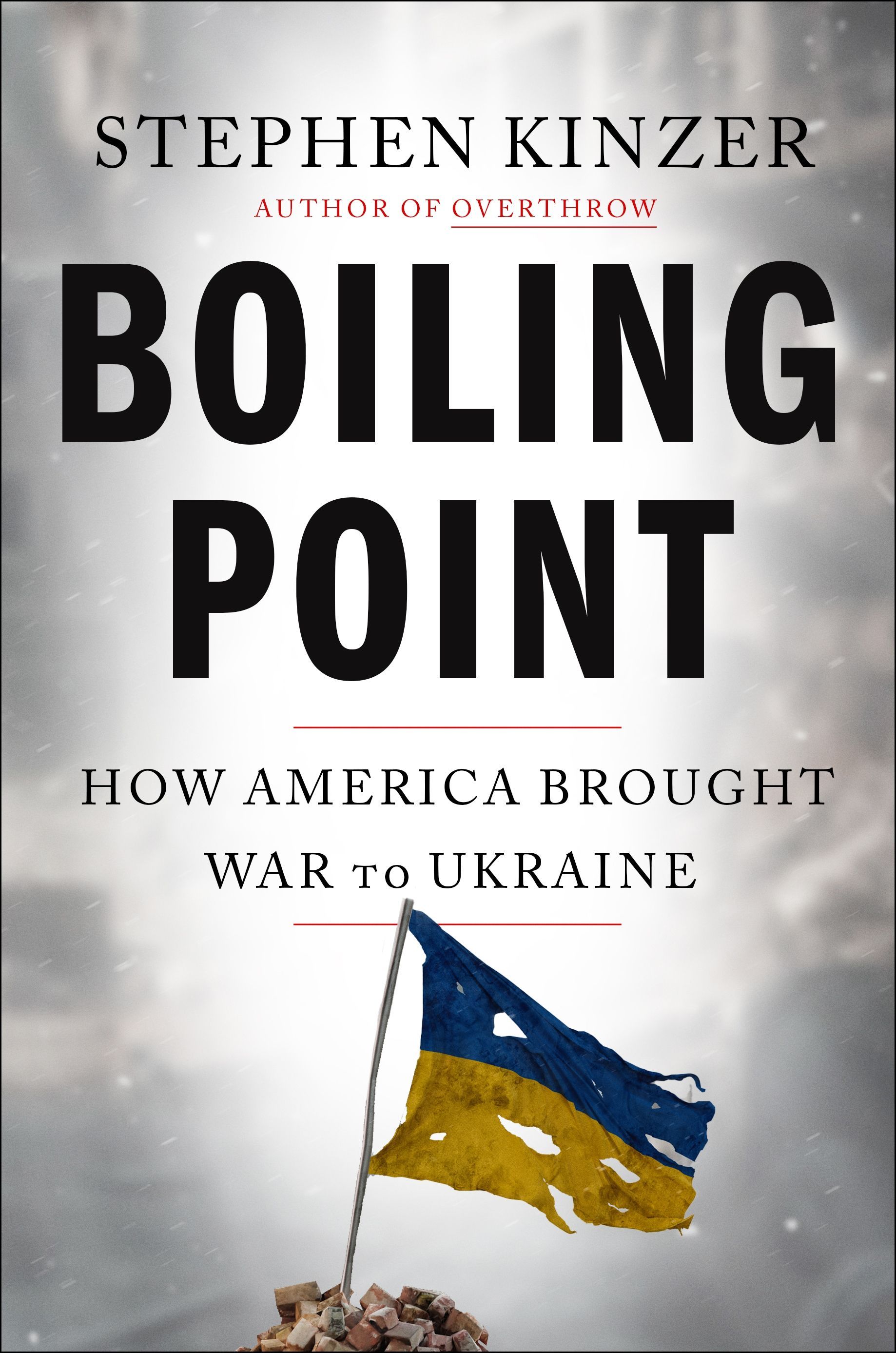
Boiling Point: How America Brought War To Ukraine
November 12, 2026 | 6pm reception | 7pm ET program
Stephen Kinzer, former New York Times foreign correspondent, award-winning writer & bestselling author; Senior Fellow in International & Public Affairs, Watson School of International & Public Affairs, Brown University
Book sales & signing facilitated by Artemis Books & Goods. Purchase at event or order in advance at
artemisbooksandgoods.com

About Boiling Point
From bestselling author Stephen Kinzer, the untold story of the secret 75-year American campaign that set the stage for war in Ukraine. Until the Russian invasion in 2022, few Americans could find Ukraine on a map. Once the fighting began, however, support for its cause surged. The reason was clear: Russia was the aggressor, Ukraine its victim. Yet this war did not explode out of nowhere. For seventy-five years, Moscow and Washington have fought over Ukraine. It is the most sustained covert conflict in modern history. Both sides sought to keep this story secret. They succeeded—until now.
In his groundbreaking new book, Stephen Kinzer tells this long-hidden story. Beginning in the refugee camps of postwar Europe, where CIA officers recruited their first Ukrainian agents, it follows generations of rebels, exiles, traitors, and covert operatives through decades of clandestine missions. Although nearly all of the guerrilla warriors that the CIA sent into Ukraine were captured or killed, it never gave up. From the late 1940s through the end of the Cold War, American leaders saw Ukrainians as their most effective weapon against Moscow. They continued to press that strategy after Ukraine’s independence and the eastward expansion of the US-dominated NATO alliance.
Richly detailed and plot-driven, Boiling Point shows how the United States made Ukraine its most important European project of the twenty-first century, culminating in the escalation that led to war. From battlefields in the Carpathians to smoke-filled offices in New York to the Olympic Games, it is full of the wild stories and improbable characters that made All the Shah’s Men a classic. This is the last great untold spy-versus-spy story of our time.
Platinum Sponsor
Nancy Davy
Gold Sponsors


Event Details
Thursday, November 12, 2026
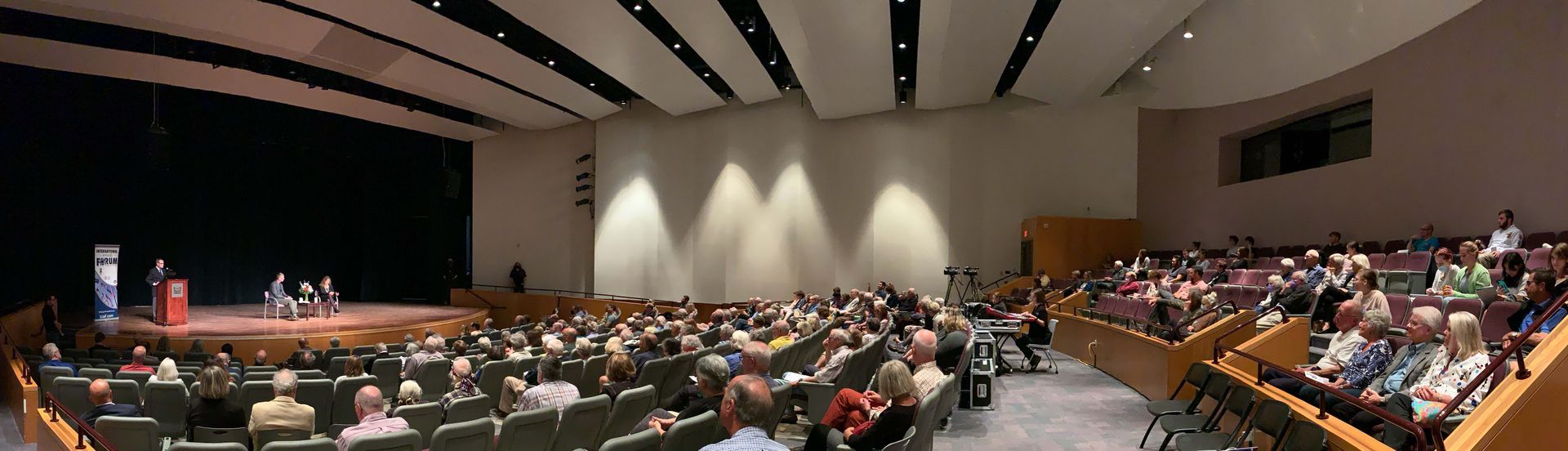
7:00 pm Eastern US program | 6:00 pm reception
Dennos Museum Center Milliken Auditorium
Northwestern Michigan College
1701 E. Front St. Traverse City, MI
Parking in Aspen Lot
Hybrid event |
in-person audience and online livestream
In-person admission* |
$20 advance purchase | $25 at venue
Online admission |
$10 per person | watch online
Students & educators |
free admission for current students and educators, including NMC and area secondary schools.
Members | Supporters of IAF do not need to purchase tickets. Members make these programs possible via membership gifts. Explore membership options here.
*We believe in equitable access to community dialogue. To keep our programs accessible to everyone, confidential ticket assistance is available. Please contact us here.
Book Sales |
Facilitated by Artemis Books & Goods. Purchase at event or order in advance
here.

About the speaker
Stephen Kinzer is Stephen Kinzer is an award-winning foreign correspondent who has covered more than 50 countries on five continents. His articles and books have led the Washington Post to place him "among the best in popular foreign policy storytelling." Kinzer spent more than 20 years working for the New York Times, most of it as a foreign correspondent. His foreign postings placed him at the center of historic events and, at times, in the line of fire. From 1983 to 1989, Kinzer was the New York Times bureau chief in Nicaragua. In that post, he covered war and upheaval in Central America. He also wrote two books about the region. One of them, co-authored with Stephen Schlesinger, is "Bitter Fruit: The Untold Story of the American Coup in Guatemala." The other one, "Blood of Brothers: Life and War in Nicaragua," is a social and political portrait that the New Yorker called "impressive for the refinement of its writing and also the breadth of its subject matter." Columbia University awarded Kinzer its Maria Moors Cabot prize for outstanding coverage of Latin America. From 1990 to 1996 Kinzer was posted in Germany. He was chief of the New York Times bureau in Bonn, and after German unification became chief of the Berlin bureau. From there he covered the emergence of post-Communist Europe, including wars in the former Yugoslavia.
In 1996 Kinzer was named chief of the newly opened New York Times bureau in Istanbul, Turkey. He spent four years there, traveling widely in Turkey and in the new nations of Central Asia and the Caucasus. After completing this assignment, Kinzer published "Crescent and Star: Turkey Between Two Worlds." In 2006 Kinzer published "Overthrow: America's Century of Regime Change from Hawaii to Iraq." It recounts the 14 times the United States has overthrown foreign governments. Kinzer seeks to explain why these interventions were carried out and what their long-term effects have been. He has made several trips to Iran, and is the author of All the Shah's Men: An American Coup and the Roots of Middle East Terror. It tells how the CIA overthrew Iran's nationalist government in 1953.
Kinzer wrote about Africa in his book "A Thousand Hills: Rwanda's Rebirth and the Man Who Dreamed It." Archbishop Desmond Tutu of South Africa called it "a fascinating account of a near-miracle unfolding before our very eyes.” In 2010 Kinzer published "Reset: Iran, Turkey, and America’s Future," which the Huffington Post called “a bold exercise in reimagining the United States’ big links in the Middle East.” Kinzer’s next book, "The Brothers: John Foster Dulles, Allen Dulles, and Their Secret World War," was widely praised. Reviewers called it sparkling, riveting, gripping, bracing, and disturbing. The Wall Street Journal called it a “fluently written, ingeniously researched, thrillerish work of popular history.” In 2017 Kinzer published "The True Flag: Theodore Roosevelt, Mark Twain," and "The Birth of American Empire." His newest book, published in 2019, is "Poisoner in Chief: Sidney Gottlieb and the CIA Search for Mind Control."
After leaving the Times in 2005, Kinzer taught journalism, political science, and international relations at Northwestern University and Boston University. He is now a Senior Fellow at the Watson Institute for International and Public Affairs at Brown University and writes a world affairs column for The Boston Globe. While posted in Turkey, Kinzer hosted the country’s first radio show devoted to blues music. He is the author of the entry on Jelly Roll Morton in The New York Times Guide to Essential Knowledge. In 2008 Kinzer was awarded an honorary doctorate by Dominican University in River Forest, Illinois. The citation said that "those of us who have had the pleasure of hearing his lectures or talking to him informally will probably never see the world in the same way again."
The University of Scranton awarded Kinzer an honorary doctorate in 2010. “Where there has been turmoil in the world and history has shifted, Stephen Kinzer has been there,” the citation said. “Neither bullets, bombs nor beating could dull his sharp determination to bring injustice and strife to light.” Learn more about Stephen Kinzer
here.